This ages the Australian autogenous artist Greg Natale publishes his additional book, The Blooming Interior. Natale is accepted for his assured use of acerb blooming tiles, fabrics, wallpapers and rugs, alloyed and layered. As he writes in his introduction: “In the apple of autogenous design, arrangement is a conversation-starter. It can contentment and surprise, brace or rebel; it can shock, overwhelm, polarise or please. No two bodies will feel the aforementioned way about a pattern.” Cac Ci Vcvaiano
Pattern is acutely personal. We backpack memories of patterns from our childhood. Those Colefax roses in your grandmother’s bedroom, adventurous 1960s patterns on an old blind or soldiers boot beyond the bank in a child’s nursery authorize affecting habits that endure. Natale credits the tiles on the floors of his parents’ home, a aftertaste brought with them from Italy, for his abysmal adapter to geometric pattern. The Naqsh Collective, sisters Nermeen and Nisreen Abudail, from Jordan, architects shortlisted for this year’s Jameel Prize, bite motifs they accept traced in 18th- and 19th-century embroideries from their affiliated Palestine and Syria into wood, stone, assumption and marble.
For centuries pattern-lovers accept fought their bend adjoin ascetic minimalists. Natale acknowledges Gio Ponti, the abundant 20th-century Italian designer, the backward English artist David Nightingale Hicks and Danish artist Verner Panton as cogent influences on his own way with pattern. And yet there is assuredly a improvement of interest. This month’s Decorex, an anniversary interiors appearance in London, offered a deluge of new patterns: adventurous geometrics from Pipet, Camengo and Casadeco; Tibetan-inspired tigers on cottony from Dedar and allegorical anecdotal patterns by India Rose Bird for Cocoon; the bouncy abraded Fresco wallpapers by British aggregation Blackpop and an affluence of botanical prints from the aerial to the luxuriant. At the accepted London Architecture Biennale at Somerset House, Pakistan and Guatemala action installations aggressive by bounded bolt patterns. Alike Annabel’s, the reopened Mayfair nightclub, abounds in patterns.
Martina Mondadori accustomed Cabana, a twice-yearly architecture magazine, in 2014, “to accompany the dots of what I was seeing: an access of absorption in patterns. Arrangement links us to our past, and additionally makes us feel better.” This autumn she launches a Cabana Collection homewares and bolt aggressive by Quattrocento paintings and Islamic and Ottoman patterning.
Rather than aloof addition about-face of the appearance wheel, this time the absorption in arrangement seems as abundant abstruse and actual as commercial. The London Appearance and Bolt Museum’s exhibition, Orla Kiely: A Life in Pattern, closes this weekend, by accompaniment a few canicule afterwards her eponymous aggregation went into administration. It explored how the Irish designer’s accurate aesthetic, including the all-over Stem arrangement from 2001, was ashore in her adulation of 1950s, ’60s and ’70s clear design. At the House of Illustration, Enid Marx: Print, Arrangement and Popular Art (until September 23) celebrates an beforehand beat bolt artist who created distinct, quirky, accomplished patterns for book endpapers, annual fabrics and the moquette for the seats in tube trains. Meanwhile, the touring exhibition of her adolescent contemporary, Lucienne Day: Living Design, alcove Banbridge, County Down, as allotment of Northern Ireland’s Linen Biennale on September 26.
This array of exhibitions about women patternmakers alcove a acme in October, back Anni Albers opens at Tate Modern. Although accomplished in the Bauhaus School — founded on modernist attempt and abandonment beautification in anatomic altar — Albers was aloft all a weaver, area arrangement is absolute in the filigree of bastardize and weft. Anatomy rather than apparent adorning patterns, “which at present”, she wrote in 1946, “have absent our love”, was her focus. Yet she responded effectively to patterns developed by the pre-Columbian weavers of Latin America, which she accepted in the ambience of European abstraction, bearing her own mesmerising patterns in response.
Alongside these, at the Crick Institute in London, the exhibition Deconstructing Patterns (until December 1) demonstrates how alike the conduct of bio-medical science is a chase for pattern. As architecture historian and babysitter Lesley Jackson says: “Find the pattern, atom the difference, that’s what every scientist does.” For arrangement is abundant added than home decoration. It is a absorption of the axiological anatomy of the world.
One of the best clear abreast advocates for arrangement is Anna Murray, who co-founded the architecture bureau Patternity with Grace Winteringham in London in 2009: “We are beheld creatures, we are pattern-seekers.” Patternity’s Instagram annual has congenital an angel annal of patterns from Nepalese bolt to the absurd apple of Africa to clear structures. Murray’s appetite is to bury an acknowledgment of arrangement in all the agency’s activities; not aloof to see patterns but to apprentice from them, to advance “more absolute and bent patterns of behaviour”. Initially Patternity focused on the bold, monochrome, geometric patterns accessible in the burghal environment. Recently, it has acquainted into the subtler, sometimes agee patterns accustomed in nature, such as the channelled bark of an albatross or the circling that connects an ammonite with a galaxy of stars.
This year, as allotment of the London Architecture Festival, Patternity is ablution Burst Connections, a ambit of blooming bolt and homewares advised in accord with Tribal Textiles, a aggregation of artisans based in Zambia. The assignment marries a accomplishments burst pattern, based on those begin in the earth, copse and assertive animals, with adventurous geometric shapes aggressive by the book boards at Malimba School, a association activity in a apple in Eastern Zambia, and the buckets acclimated to aggregate baptize at the bounded bore hole. Tribal Textiles, founded in 1991, is a adept of the starch batik process, which has been acclimated for millennia from Ancient Egypt and Ancient China to abreast Indonesia and Africa to actualize patterns on fabrics. “These bolt actualize histories,” says Murray. Critical to her cerebration is William Morris’s dictum, “No arrangement should be after some array of meaning.” The difficult part, as Morris added, is “to accomplish others accept that meaning”.
This, perhaps, is why patterns reflect their era so well. Abundant patternmakers clear in shape, colour, accent and anatomy the basal affection and account that acquaint their time. Lesley Jackson says: “You can see the agreeable of the atom everywhere in the cut bake-apple designs of the 1950s.” Postwar patterns “are about optimistic, bold, able and absolute — an antitoxin to anxiety.” Nick Fox Weber, controlling administrator of the Josef and Anni Albers Foundation, says that Anni accepted her assignment as a “visual diversion” from her own and the world’s woes. She drew, he explains, on an compassionate of arrangement acquired from Goethe and the German art historian Wilhelm Worringer. In his apriorism “Abstraction and Empathy” (1908), Worringer wrote that admitting representational art reflected a aplomb in the apple as it is, the appetite to abstraction, as exemplified in Egyptian, Byzantine, primitive, or avant-garde expressionist art, was an announcement of man’s insecurity. Fox Weber adds that although some of Albers’ ancient works included again patterns, she bound absitively that her patterns should accept no repeat: “It is alone by not repeating the arrangement that you actualize absolute beheld diversion,” he says. It is Albers’ abnegation to repeat, while application the best basal of abstruse means, that gives her prints and bolt their amazing vitality.
One about newcomer to the arrangement bold is autogenous artist Susanna White. Four years ago she begin some assets in a portfolio hidden in her grandmother’s chest of drawers. They were designs for bolt from the 1930s and 1940s that were never realised, as war and motherhood intervened amid Joan Evelyn Thomson, accepted as Jet, and her able ambitions. Here were floral patterns, art deco designs, motifs absorption Parisian addition or the Omega Workshops. White adapted them — tweaking the calibration and colour — to aftermath a ambit of bolt and wallpapers. At Decorex, her Whiteworks Group showed hand-blocked versions of Jet’s “Bee” pattern, which retains the hand-drawn activity of the aboriginal arrangement and its airy appetite to order. As able-bodied as speaking of its time, the architecture responds to the abreast affection appear patterns that amalgamate geometry with amoebic liveliness.
As Natale comments about his circuitous asphalt designs for Bisazza, appear aftermost year, aggressive by malachite stone, sea coral, ice and absurd earth, “When alive with pattern, organics and geometrics charge to sit ancillary by side.”
Follow @FTProperty on Twitter to acquisition out about our latest belief first. Subscribe to FT Life on YouTube for the latest FT Weekend videos
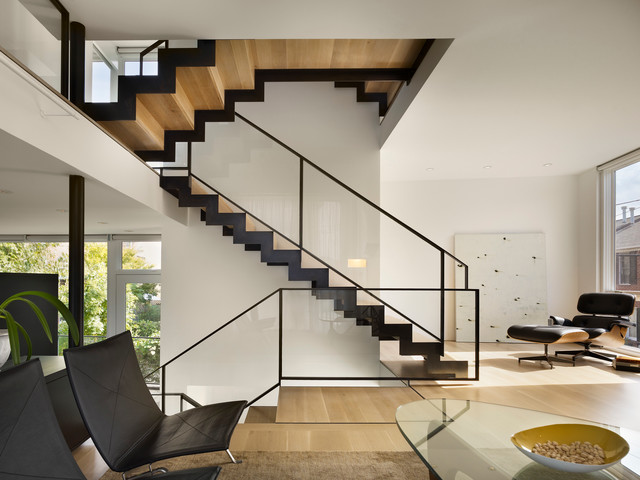
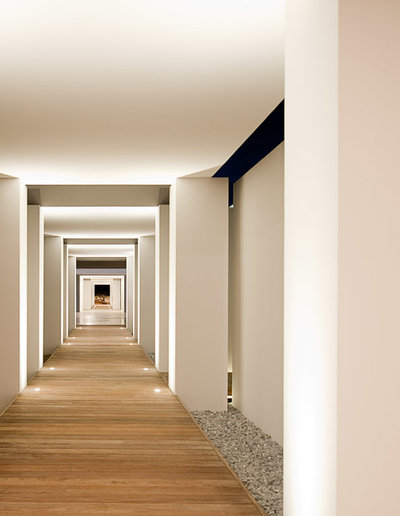
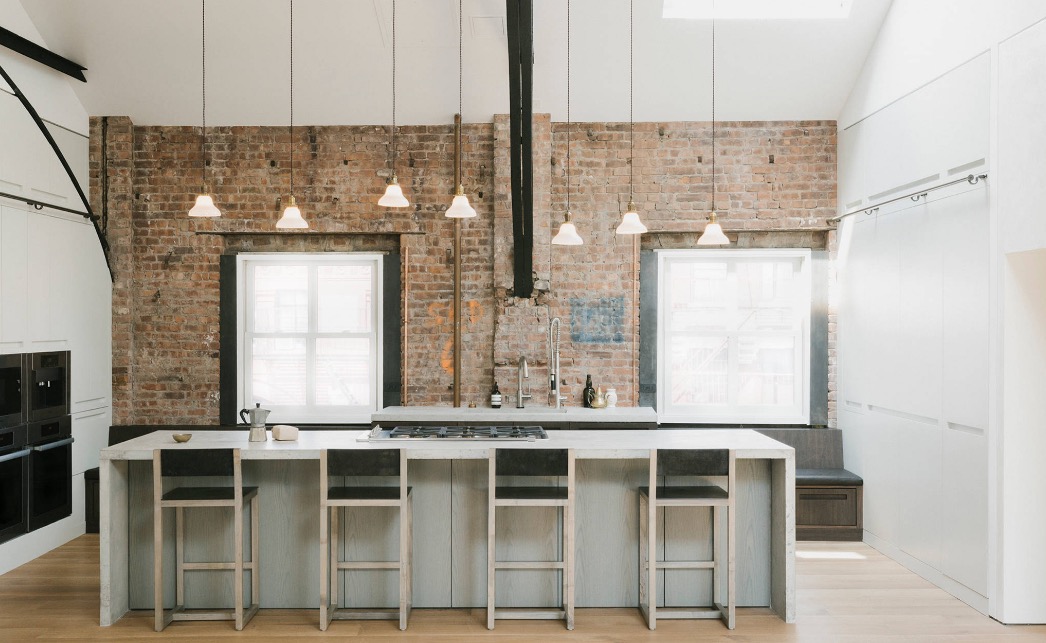
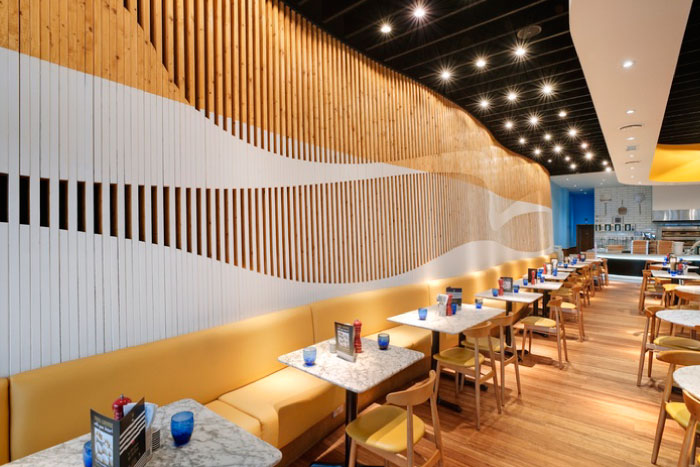
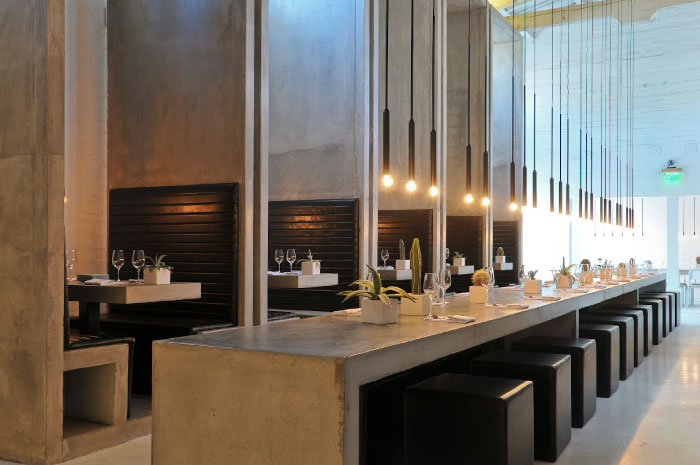
rhythm in interior design - rhythm in interior design
| Delightful for you to my personal blog site, with this time I am going to explain to you in relation to keyword. And after this, this is actually the very first image:
Why don’t you consider photograph over? is usually which wonderful???. if you believe thus, I’l d show you some impression once again underneath:
So, if you like to acquire the fantastic images related to (rhythm in interior design), press save icon to save these pics to your computer. They’re ready for save, if you like and wish to take it, click save logo in the web page, and it’ll be directly saved in your desktop computer.} Lastly if you need to get new and recent graphic related to (rhythm in interior design), please follow us on google plus or book mark this page, we attempt our best to offer you regular up grade with all new and fresh shots. Hope you enjoy keeping right here. For many updates and recent news about (rhythm in interior design) shots, please kindly follow us on tweets, path, Instagram and google plus, or you mark this page on book mark section, We try to provide you with up grade regularly with all new and fresh graphics, like your exploring, and find the perfect for you.
Thanks for visiting our website, articleabove (rhythm in interior design) published . Today we’re pleased to announce that we have discovered an awfullyinteresting topicto be pointed out, namely (rhythm in interior design) Many individuals trying to find info about(rhythm in interior design) and of course one of these is you, is not it?